Architectural Exterior & Facade Illumination
A technical guide to minimalist Belgian outdoor fixtures: weathering harsh maritime climates, precision wall grazing, dark sky compliance, and concealed in-ground engineering.
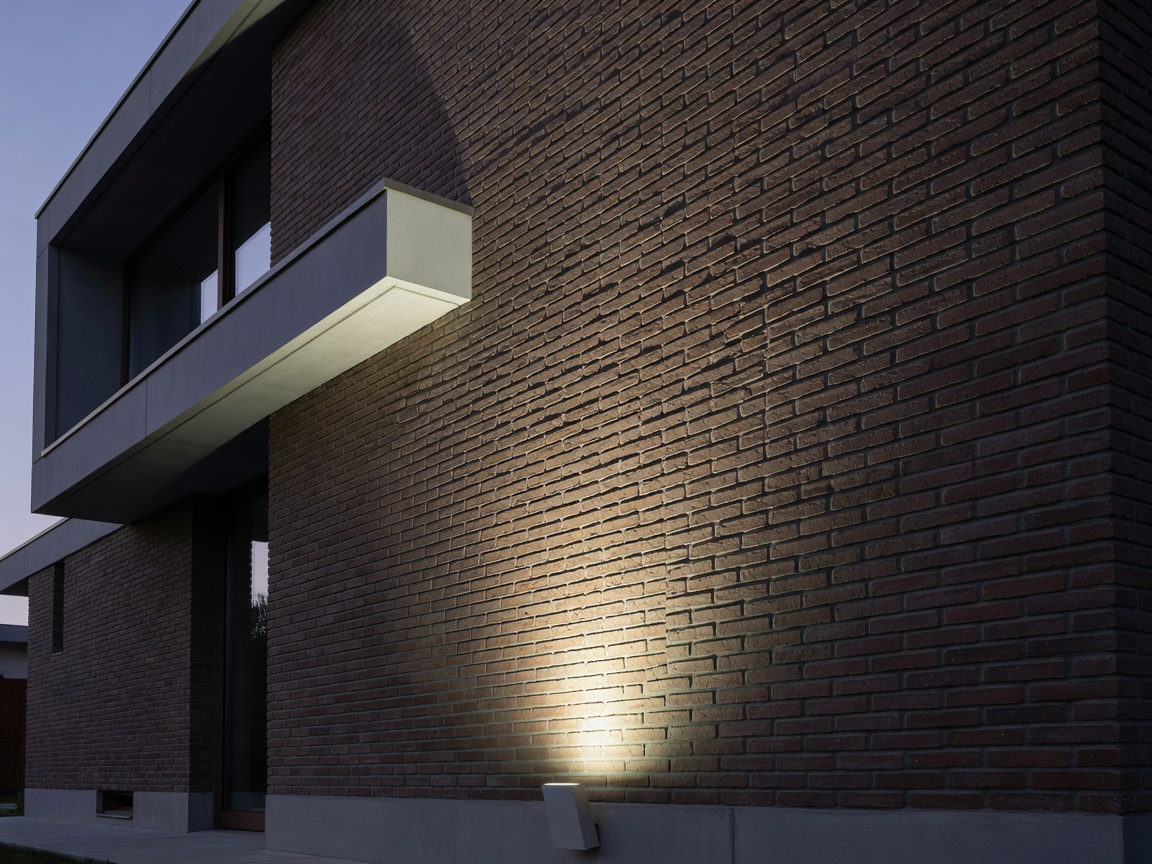
The Challenge of Northern European Weathering
Belgian exterior luminaire engineering is profoundly shaped by the regional climate: frequent North Sea rain, damp Atlantic maritime air, industrial airborne salts, and intense winter freeze-thaw cycles. An exterior fixture that functions well in an arid Mediterranean setting will often suffer water ingress or galvanic corrosion within two seasons in coastal Flanders if not engineered with extraordinary rigor.
Belgian lighting brands have earned an elite international reputation for rugged exterior performance disguised within ultra-refined, architectural minimalist profiles. Rather than large industrial floodlights, their catalog focuses on compact bollards, flush ground-recessed uplights, and low-profile surface grazers that articulate architectural masonry without leaking light into the night sky.
Ingress Sealing, Pressure Equalization, and Condensation Prevention
Achieving true long-term IP67 (submersion up to 1 meter) and IP68 reliability requires more than simple silicone gaskets. When high-power LEDs switch on, internal air heats up, expands, and exerts positive pressure against seals. When switched off at midnight in freezing temperatures, the internal air contracts rapidly, creating negative internal pressure.
This vacuum draws moist ambient air in through the microscopic imperfections of cable glands—a phenomenon known as capillary pumping. Once moisture condenses inside the optical chamber, glass fogging and driver failure are inevitable. Belgian exterior fixtures counter this using integrated Gore-Tex breathable membrane valves. These microscopic PTFE membranes allow air molecules to pass freely to equalize internal/external pressure while preventing liquid water and particulate ingress entirely.
Qualicoat Class 2 Finishes and Low-Copper Alloys
Surface treatment represents the primary defense against cosmetic and structural degradation. Belgian exterior luminaires are cast from marine-grade die-cast aluminum alloys with copper content strictly restricted below 0.1% (EN AC-44300 or similar). This low copper threshold prevents galvanic pitting corrosion.
Before coating, components undergo multi-stage chemical pretreatment, including zirconium passivating nano-conversion coats. The exterior is then electrostatic powder-coated with Qualicoat Class 2 super-durable thermosetting polyester powders. Tested to withstand over 3,000 hours of continuous neutral salt spray (ISO 9227), these coatings resist UV chalking, color fading, and blistering for more than fifteen years in aggressive coastal conditions.
| Luminaire Type | Ingress / Impact Rating | Optical Distribution | Drive-Over Load (kg) | Key Architectural Role |
|---|---|---|---|---|
| In-Ground Uplight | IP68 (2 m) / IK10 | 10° Narrow or 15°x40° Oval | 2,000 kg (Pneumatic tires) | Tree canopy uplighting, column accents |
| Linear Facade Grazer | IP67 / IK08 | Asymmetric 12°x60° | N/A (Surface Mounted) | Brick, stone, and board-formed concrete grazing |
| Architectural Bollard | IP65 / IK09 | 180° Shielded Downlight | N/A (Bollard post) | Pedestrian pathways, perimeter garden boundaries |
| Recessed Step Light | IP66 / IK08 | 45° Downward Asymmetric | N/A (Wall Recessed) | Outdoor stairways, low terrace boundary walls |
Dark Sky Compliance and Ecological Lighting Design
Uncontrolled exterior lighting disrupts nocturnal ecosystems and obliterates the night sky. In alignment with stringent European Dark Sky standards, Belgian exterior fixtures feature strict Zero Upward Light Output Ratios (ULOR = 0%).
Light is precisely directed downward or grazed tightly against building envelopes with sharp 90-degree optical cutoffs. Furthermore, ateliers provide warm 2200K and 2700K amber LED configurations with blue light emissions below 500 nm minimized, substantially reducing nighttime disturbance to local insect and bird populations.
Specification Trade-offs: Comparing Architectural vs. Utility Systems
Engineering Superiority
- Pressure Equalization: Gore-Tex breather valves permanently eliminate internal condensation fogging.
- Dark Sky Stewardship: ULOR = 0% optics protect the night environment from intrusive light pollution.
- Qualicoat Class 2 Durability: 3,000+ hour salt-spray certified coatings withstand aggressive environments.
- Architectural Camouflage: Compact dimensions merge discretely into garden stonework and facade reveals.
Installation Precautions
- Ground Drainage Requirement: In-ground fixtures require a minimum 300 mm gravel drainage bed below installation pots.
- Resin-Sealed Cable Joints: Underground wiring splices must be encapsulated in two-part polyurethane resin potting boxes.
- Initial Investment: Multi-stage chemical conversion and Class 2 finishes command higher upfront procurement costs.
Sub-Surface Drainage and Ground Preparation
The most common failure point for in-ground luminaires is inadequate civil ground preparation. Even an IP68-rated luminaire should never sit permanently submerged in standing ground water without adequate drainage. Belgian specification documents mandate that all ground housings sit atop a minimum 30 cm gravel sump (granulometry 8–16 mm). During commissioning, the installer fills the included resin-potted IP68 gel connector, guaranteeing hermetic cable integrity for the lifespan of the structure.
Engineer Your Exterior Lighting Project
Obtain complete exterior photometric models, drainage trench schematics, and marine-finish technical data sheets.
Request Exterior Lighting Dossier